Deep Soup

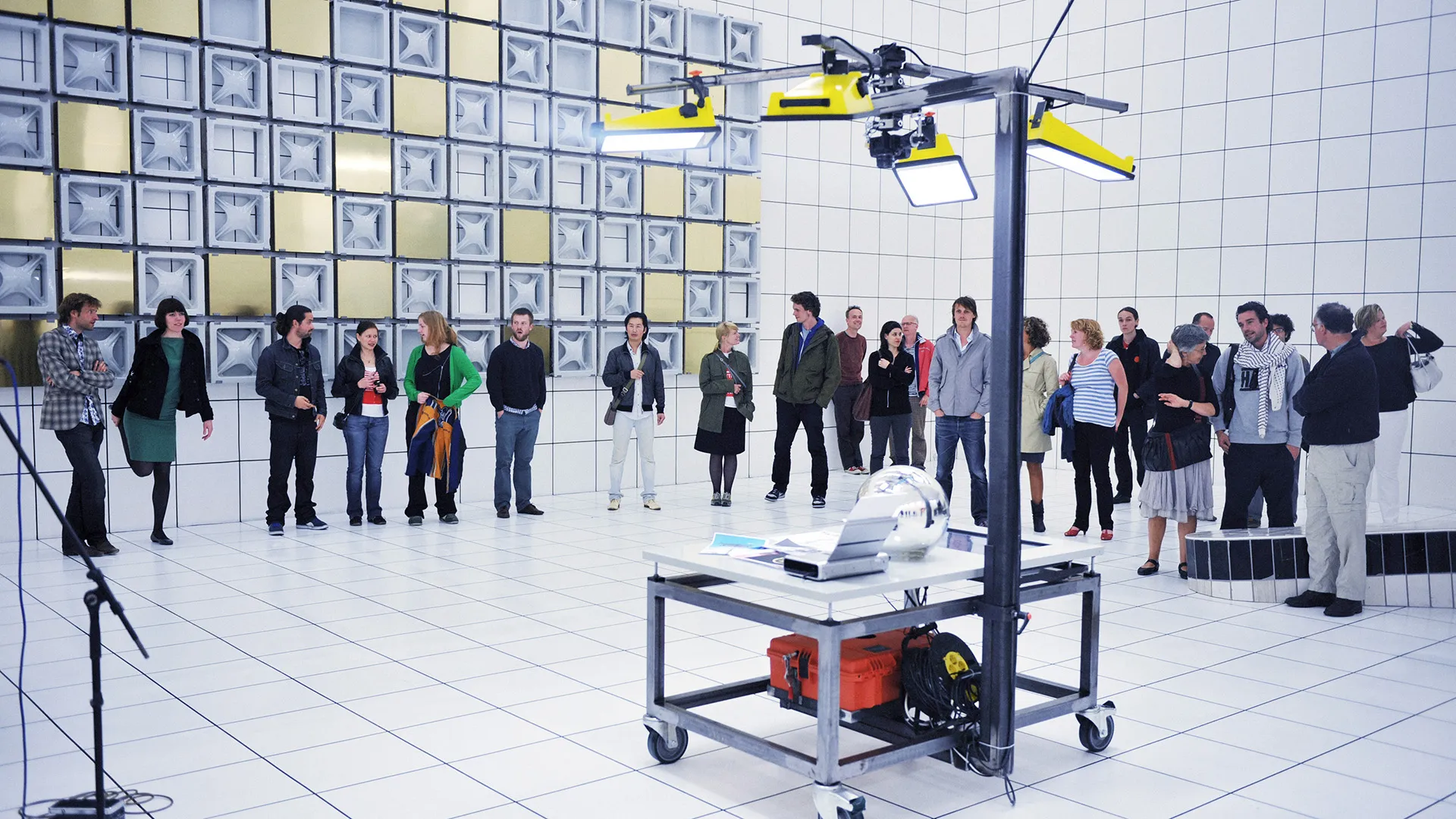
Deep Soup is an collaborative, short science fiction film, celebrating our physical reality.

We live in a world where digital technology and AI increasingly trap us in our heads. Through screens, our minds are constantly stimulated while our bodies, and the physical world around us, fade into the background. These digital systems promise frictionless perfection, in sharp contrast to our messy, tangible reality.

Deep Soup is a participatory short sci-fi film that challenges this imbalance. By turning the tables on technology and AI, it invites viewers and participants to reconnect with the material world. Rewiring perception, it offers a new way of looking at the physical world. A world of matter, movement, and gravity.

In the film post-humanists Luna Maurer and Roel Wouters are developing a physical intelligence model: Deep Soup. One that learns from matter, not from data. With humans from all over the planet they have gathered recordings of matter to feed their model.

The soup thickens.
Designing Friction

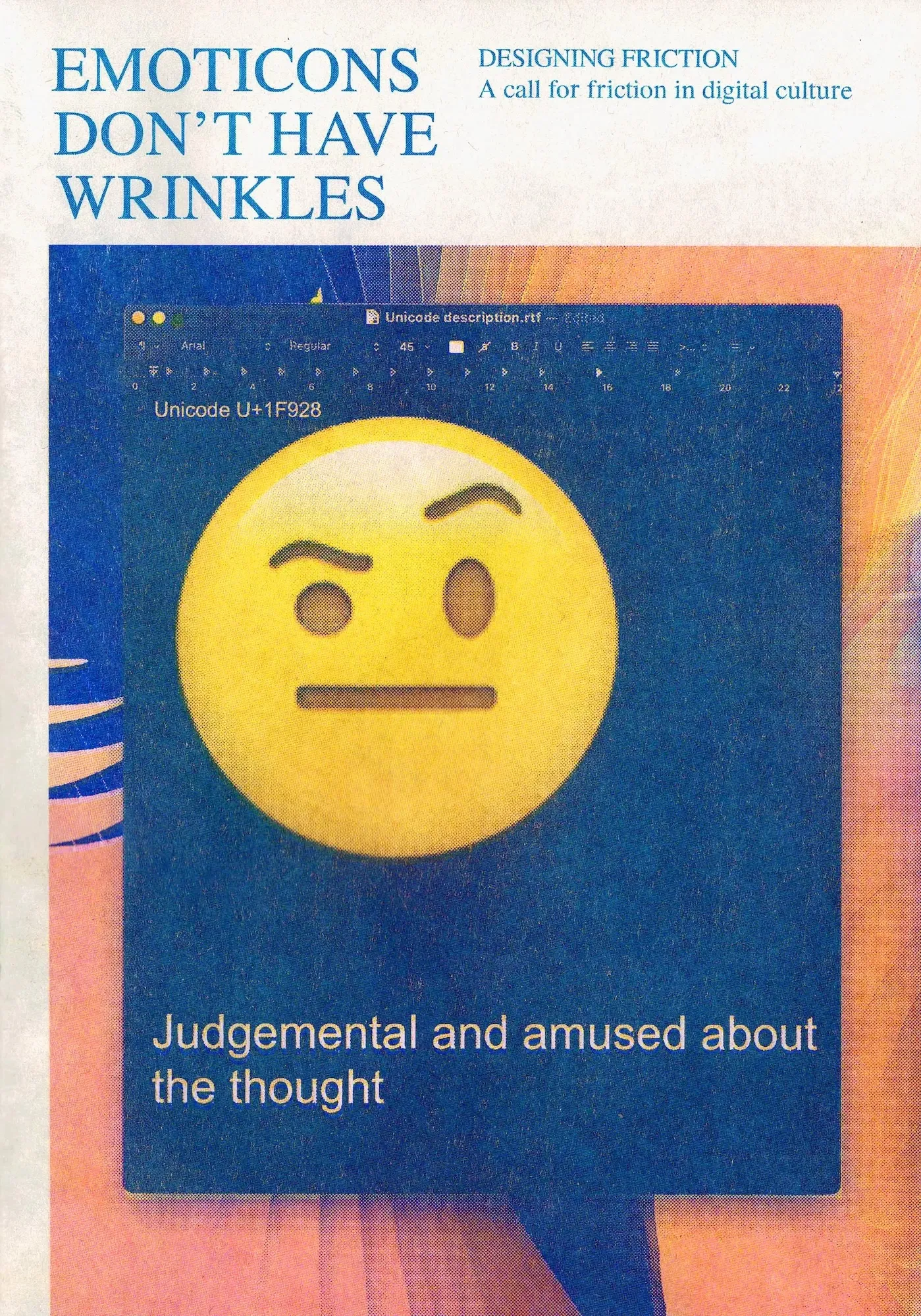
Designing Friction publication and visual identity

Designing Friction is a manifesto project about what gets lost when digital systems optimize every interaction for speed, smoothness, and predictability.

Co-authored by Roel Wouters and Luna Maurer, the project argues that friction is not simply inconvenience. It can also be a productive form of resistance: something that slows us down, makes us aware of our actions, and reintroduces curiosity, attention, and bodily experience into networked life.

The project positions friction as a fundamental design material. It proposes a new design paradigm for digital products. Rather than identifying a problem, removing it an capitalize on the solution, Designing friction asks what kinds of pauses, detours, and ambiguities does a digital product needs to maintain, or stimulate meaningful relationships between people.

Friction is all we have!

Do Not Draw A Penis

Do Not Draw A Penis is a browser-based drawing game built around the blind spots of automated image classification. Players are asked to draw anything except a penis, while the system stimulates drawing everyday doodles it becomes paternalistic and starts moderating when the ‘user’ does not align with its ‘terms and conditions’. After multiple violations the system becomes rude and starts feeling helpless.

Developed by Moniker after the release of Google’s Quick, Draw! dataset, the project treats moderation, training data, and platform morality as design material. Humor becomes the interface for a sharper critique: the rules embedded in large-scale datasets are never neutral, and the categories they omit shape what we as humans are able to imagine.

Conditional Design

Conditional Design workshop documentation

Conditional Design is the result of what began in 2008 with impromptu meetings on Tuesday nights between Edo Paulus, Jonathan Puckey, Roel Wouters and Luna Maurer, around the latter’s kitchen table.The Amsterdam based artist and designers, were looking for ways to avoid being defined by the media they worked with. Media are a common, yet restricting way of describing design- and artistic projects and practices.

Instead, they decided to search for a new term and definition that sufficiently described their way of working. The collective formulated a Manifesto, the Conditional Design Manifesto, in which they stated their shared views about design and art. Conditional Design focusses on the notion of designing conditions and rules of play that invite collaboration within a ‘regulated’ process towards an unpredictable design or result.

Conditional Design is an approach that reflects the tendencies of our contemporary society - under the influence of the media and rapid technological developments, our world, our lives and the way we interact with each other are increasingly characterised by speed and in a state of constant flux. In order to reflect the here and now, the members of Conditional Design adapt their methods to coincide with these developments focussing on processes rather than products, allowing their work to adapt to their respective environments, emphasise change and display differences.

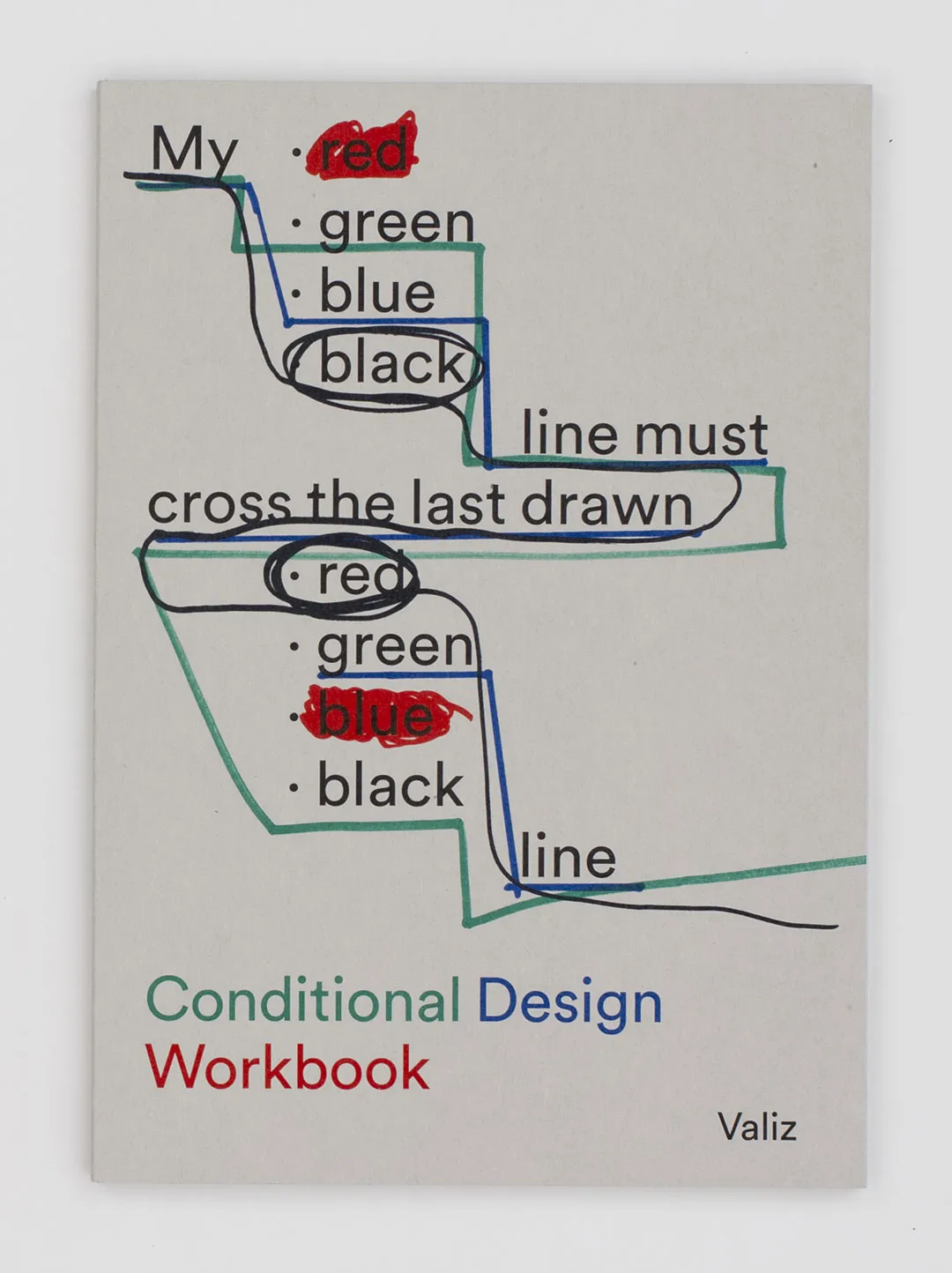
Meanwhile the manifesto has been embraced by design educators around the world. In 2013 the Conditional Design Workbook, including several articles and many workshops, was published by Valiz and quickly sold out. Now is available again in a digital editon.

Grip

zZz is playing: Grip is a music video recorded live, as part of the opening ‘Nederclips’ curated by Bart Rutte at the Stedelijk Museum in ‘s-Hertogenbosch.

It is a one take, top shot music video with trampoline gymnasts simulating typical video effects.

The important criteria were that the audience at the opening would be able to witness the whole shoot, and that the video could be added to the exhibition immediately after the shoot.

The concept of the music video and the original music were licensed for a Fiat Grande Punto tv advert

clickclickclick.click

clickclickclick.click is a browser-based work that reveals the hidden mechanics of online tracking. Its a a browser event based game, developed by Moniker & VPRO.

The visitor of clickclickclick.click will find itself on a flat white website with one single green button in the centre of the screen. Confronted with this empty screen the user (called ‘the subject’) most likely will be triggered to act with his mouse. Then the story starts. Everything, even the most tiny movement that we assume not worthy mentioning gets measured, recorded and valued. A feedback of written observations scroll in the screen, the user gets aware that he has entered an environment where his actions are transparent.

On top of these ‘objective’ measurements a narrating voice starts to judge the user upon its behavior and draws his conclusions – boring, exceptional, probably female, oh nooo - yes! Far reaching diagnosis and conclusions. Since all other visitors of clickclickclick.click before him or her had been observed as well, his actions are compared to others’… ‘This subject is pretty mediocre’…

Rather than treating surveillance as invisible infrastructure, the project stages it as performance. It exposes how websites monitor attention, infer intent, and shape behavior through interface feedback that is usually designed to remain unnoticed.

Dance Tonite

Dance Tonite is a collaborative WebVR music video for LCD Soundsystem, made together with Jonathan Puckey, and Google’s Data Arts Team. Built around the track Tonite, the work invited fans to record dance performances using room-scale VR, turning everyday headsets and controllers into a rough motion-capture system.

Rather than chasing VR spectacle, the project focused on something simpler and stranger: how just a few tracked points can already feel deeply human once they start moving. The result is an ever-changing choreography. Dance tonite promotes the open web as a space for collective authorship.

Do Not Touch

Do Not Touch is an interactive music video built around distributed participation.

Rather than treating the audience as passive viewers, the project invites large numbers of online contributors to shape the moving image collectively through their cursor activity. The work turns interface behavior into choreography and treats the browser as a shared performance space.

It has become one of the best-known examples of their interest in participatory systems, where formal constraints create the conditions for collective authorship.

Emoji Is All We Have

Emoji is all we have is a series of four films featuring conversations Luna and Roel have had revolving around the relationship between humans and digital technology.

How does digital technology inform our daily lives? They talk about the selfie, the ego and their shrinking tech optimism. The conversations took place against the backdrop of the Swiss mountains and the old village of Tschlin. The faces of Roel and Luna are painted yellow to create an emoji-persona having the conversations. A special construction with a smartphone attached to a helmet was developed by Thomas Boland to film the faces from upfront.

The viewer becomes witness of a conversation where pleasure, assertiveness, validation, fragility and insecurity constantly alternate. Real emotions seep through the yellow painted faces and their authority on the subject matter seems less founded than they thought.

My Inner Wolf

My Inner Wolf still

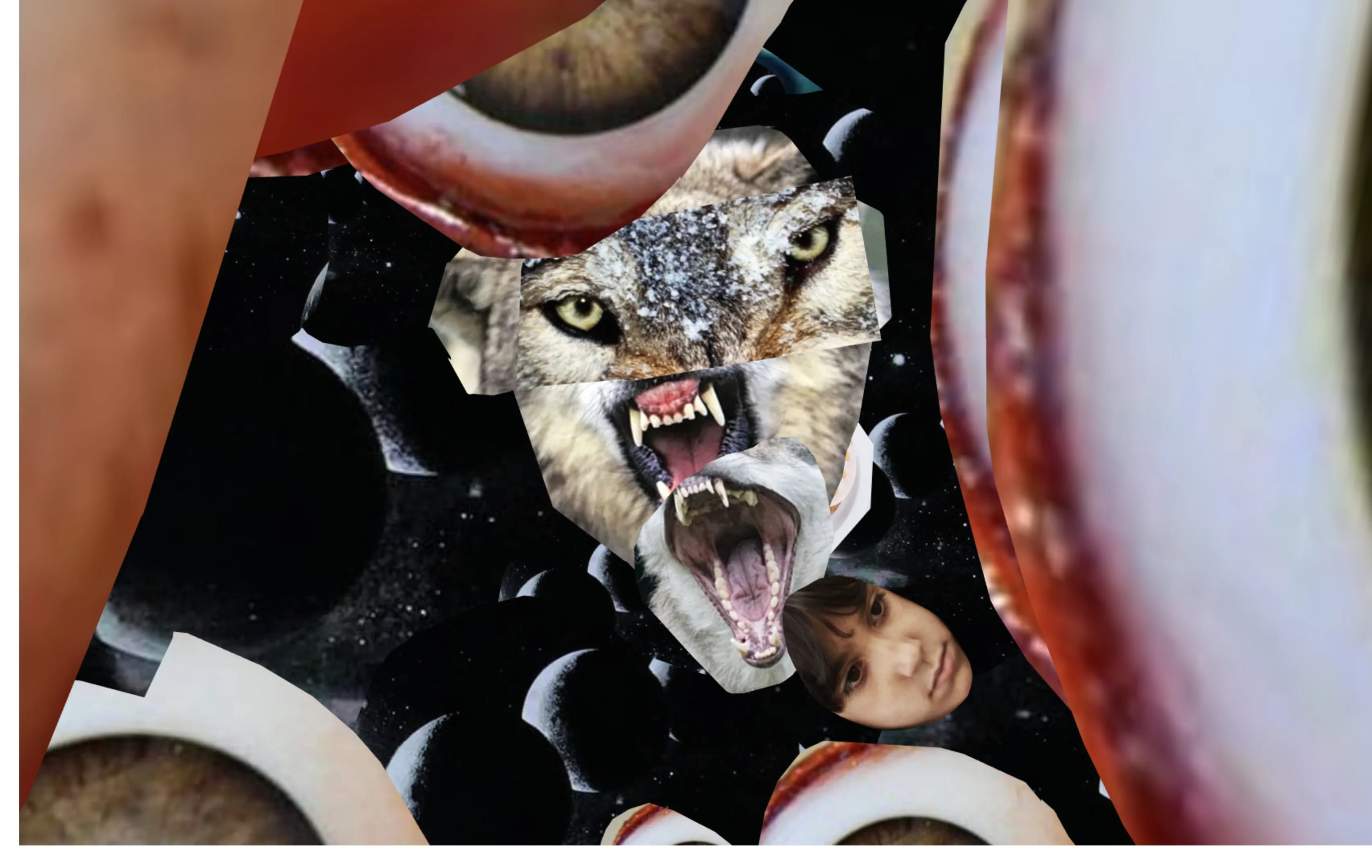
My Inner Wolf is a tool for mapping our inner world but also, more importantly it functions as a tool to discuss the nature of an absence seizure.

It’s a one minute animated collage, an endlessly repeating loop of an involuntary transition from a friendly domestic space to our deepest, darkest fears. The loop is art-directed by the photography of our visitors, and every iteration of the loop new submissions are used to make up the imagery.

Since people keep contributing more and more photographs, more and more versions of My Inner Wolf are coming to life. The longer you watch the more Inner Wolfs you will see.

Its nice to see that some contributions really change the whole vibe of the film.

Place a Stone

Place a Stone - De Dam documentation

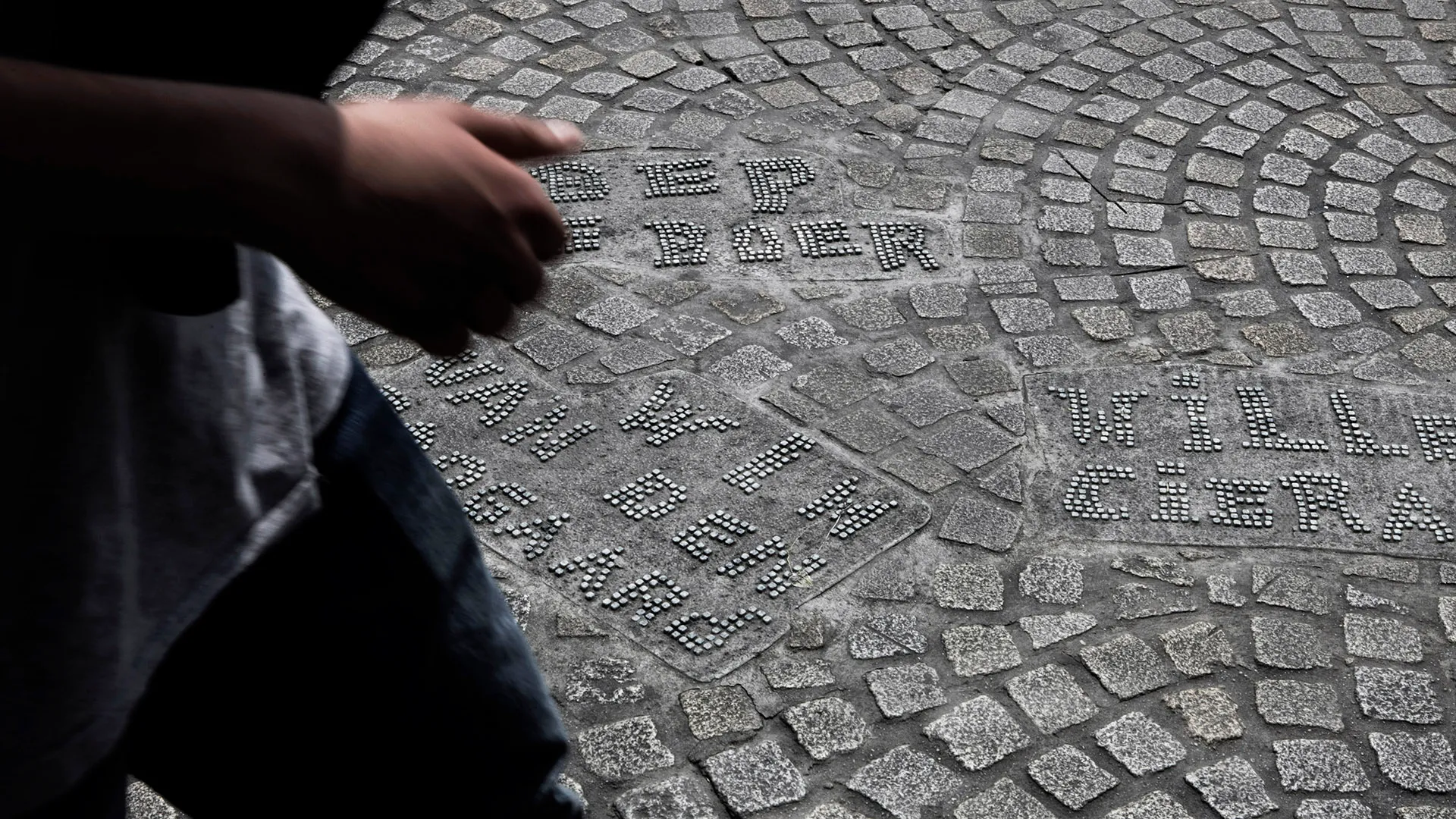
A memorial on the Dam Square in Amsterdam for the victims who perished during the fatal shootout in the same location on May 7th, 1945, two days after the German capitulation in the Netherlands.

The memorial is co-created by thousands of visitors to placeastone.nl. Each participant is invited to place his/her stone in order to help write the names of thirty-two victims.

Everyone who visited placeastone.nl between June 2015 and March 2016 was invited to add one small stone, and to replace one small stone per name. As a result the typeface was continually growing and shifting. Starting as a single row of small stones, the typeface expanded with the burgeoning number of participants.

More and more stones were placed and replaced, and more decisions were made – where can a letter be bigger? Or fatter? Or how can a letter become more readable? By being allowed to place only one stone and replacing another, the typeface transformed ceaselessly in the course of nine months.

Red Follows Yellow Follows Blue

Red Follows Yellow Follows Blue Follows Red is another outcome of Monikers continuing investigations into crowd behaviour and audience participation.

The concert hall becomes the stage, the audience the actors. Each audience member receives a pair of headphones and a red, blue or yellow cape and is asked to follow the instructions.

These instructions invite the participant to move across the stage and interact with other participants in different ways. For example, participants with a red cape are asked to ’follow yellow but avoid blue’, while participants with a blue cape are asked to ’follow red but avoid yellow’.

The combined reactions of the participants to the ever changing instructions leads to constantly transforming formations and patterns.

In Red Follows Yellow Follows Blue Follows Red, we play with the possibilities and pitfalls of organizing groups of people. We explore the different attributes of the crowd and the role the individual plays within it. The performance oscillates between order and chaos, the wish to belong and the need for individuality.

Sandro–Louise Bourgeois

To celebrate SANDRO’s new capsule collection based on three textile works of the artist Louise Bourgeois, Sander, Roel and Random Studio’s team created a store takeover at Galeries Lafayette Hausmann in Paris. Eleven windows showcase a dynamic, spatial reinterpretation of Bourgeois’ spirals, with mirror installations strategically placed to reflect and refract the patterns into new kaleidoscopic formations. Elsewhere the focus is more kinetic, honing in on the movement of the material to set the pattern in motion.

Spatial AI - The Entrance

Spatial AI - The Entrance is the first public offering of Random Studio Living Lab: an artistic research trajectory into how spaces can evolve from static architecture into dynamic environments animated by technology.

Led by artist and director Roel Wouters and developed in collaboration with artist Johannes Offerhaus, the work focuses on a specific spatial species: the entrance. Treated as a filter, portal, and emotional threshold, the installation reframes arrival as a theatrical first encounter.

Visitors walk up a ramp and through a curtain into a space that “sees” them back. Two generated voices immediately begin a live conversation about the person entering: one from the perspective of a biologist observing physical detail, the other from a sassy fashionista reading cultural signals and dress codes.

The installation uses OpenAI’s GPT-4 vision capabilities to interpret visitor imagery and generate this dual-character dialogue, which is then voiced through ElevenLabs. By making implicit judgments audible, The Entrance exposes the social assumptions embedded in datasets, systems, and spectatorship itself but also asks the question: What if spaces will be able to have ‘a first impression’ of anyone entering it?

In conjuction with this project we also made a small zine.

Spatial AI - The Floor

Spatial AI - The Floor installation view

Between 2024 and 2025 Roel explored how computer vision and large language models can create sentient spaces: environments capable of forming emotional relationships with visitors.

The research unfolded through three connected prototypes.

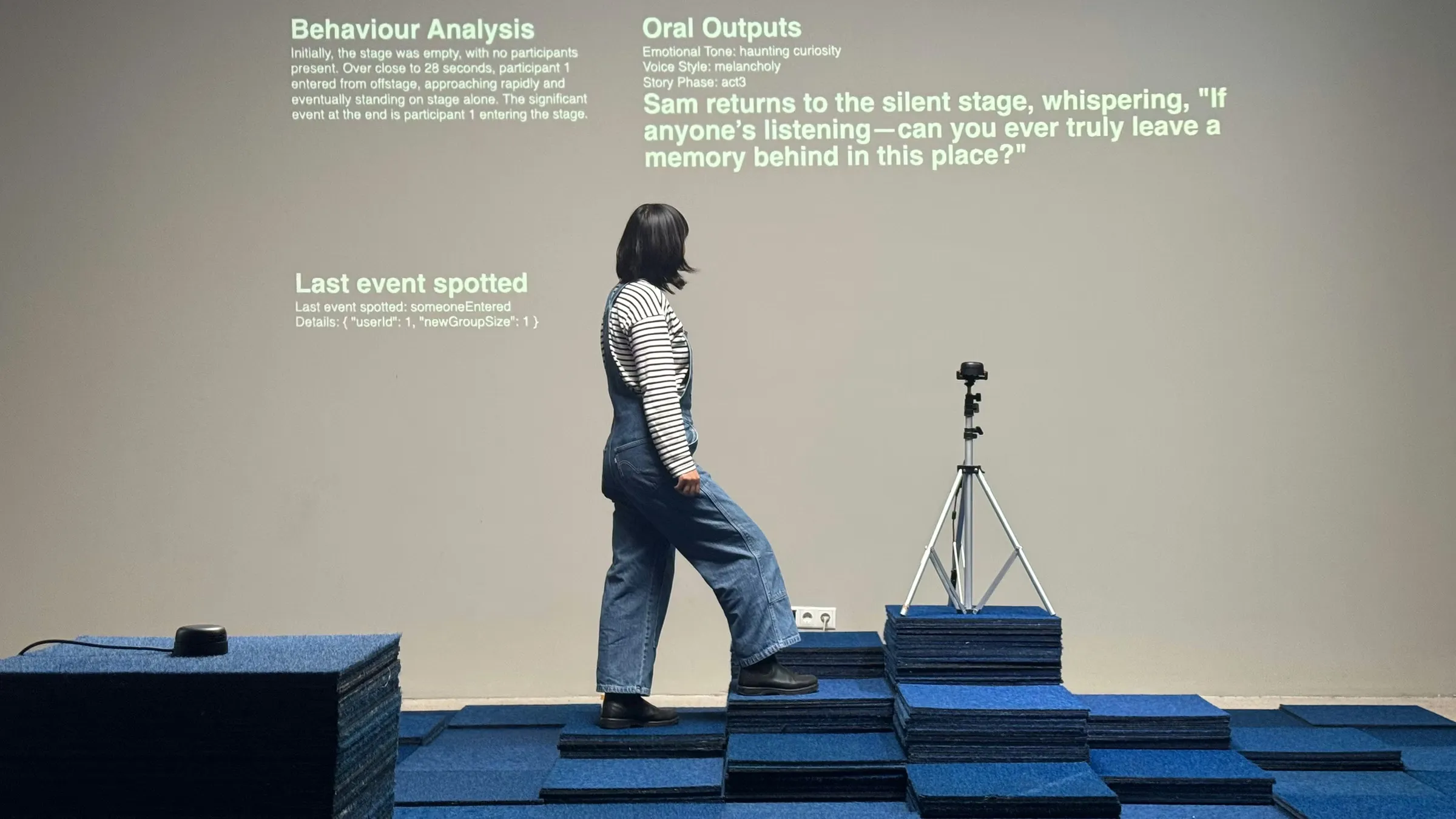
Prototype 1, Understanding Intent, asked whether a space could infer human intention. Two LiDAR sensors tracked X/Y position and a camera tracked gaze. A language model, prompted as a data analyst, described live movement patterns from positional data only. A second model, prompted as a behavioral scientist, interpreted those observations and added context.

Prototype 2, Directing the Visitor, shifted from observation to intervention. Alongside the analyst model, a director model began issuing real-time instructions to shape behavior: inviting visitors into empty space, guiding them to specific positions, and persuading them to stay.

Prototype 3, The Sentient Floor, became a fully performative environment without a predetermined outcome. Multiple model roles operated in continuous dialogue: scenarist, data analyst, behavioral scientist, autonomous storyteller, and continuity assistant.

Together, the three prototypes moved from reading behavior, to directing behavior, to co-creating behavior and narrative in real time. The project challenged assumptions about agency, authorship, and intimacy between humans and intelligent environments.

The Garden

The Garden functions as an icebreaker between people in a physical space. The installation uses a combination of ChatGPT and DALL-E to synthesise the characteristics of two plants and create a new, one-of-a-kind seedling.

The garden naturally is a symbol for the human control and superiority over the brutality of nature. We exert our superiority over nature by seeding, grafting, crossbreeding plants, and arranging them pleasingly, making the garden a place where we can consume nature, stripped of all its terror and arbitrary cruelty. One could argue that we’re now facing the same challenge as our ancestors in the Fertile Crescent. Will we find a way to domesticate Al technology as we domesticated nature, or will it exceed our grasp?

But also… Can Digital Technology be used to bring people physically together inside a space?

The Lens

The Lens explores the relationship between digital mediation and embodied physical experience.

The project reflects a persistent concern in Roel Wouters’ work: how interfaces, devices, and visual systems reshape the way people inhabit and understand the physical world around them.

The Puff Up Club

The Puff Up Club was founded in the context of the exhibition “Alexander Calder & Fischli/Weiss” at Fondation Beyeler in Riehen/Basel, Switzerland.

The exhibition was devoted to the American artist Alexander Calder and Swiss artists Peter Fischli and David Weiss. It focussed on the fleeting, precarious and exhilarating moment of fragile balance as expressed through the works of Calder and Fischli/Weiss in the early- and late-twentieth century, respectively.

Visitors of puffup.club needed to team up in order to puff up the balloon. Their progress was streamed live from a physical installation located at our studio in Amsterdam.

We have always been intrigued by the elegance in terms of engineering in their work. Simple effective constructions that create a state described as ‘fragile balance’ or as ‘An exciting moment of precariousness and tension’ in the context of this exhibition.

Our aim was to create an online installation that could bring people together as a group in order to change something in the real world. We invite the audience to come and click a button. Together we will inflate the balloon.

In our hearts we know what the outcome will be. The tension slowly builds.. Not yet…Not yet.. Only a few people will be there to witness the final moment. Not yet… Wait for it… Now!

Wex Machine W139

Wex Machine W139 documentation

A physical website and for W139, an artist run exhibition and production space for contemporary art in Amsterdam.

The WEX Machine is a table that is photographed from top every 5 min. The photograph is automatically published on the front page of W139. This allows visitors and staff members from the W139 to easily and instantly publish their thoughts, wishes or announcements to the web. The WEX is dressed with a touch screen to access the W139’s archive, a silver sphere to peek inside the gallery space and a printer that allows online visitors to upload images, artworks or thoughts to the physical gallery space.

The WEX’S name is a combination of the words W139 and EXtender. We also like the link with the memex a hypothetical proto-hypertext system that Vannevar Bush described in 1945.

Return to bio